Table of Contents
How to Choose the Best Food Storage Containers: The Ultimate Buyer’s Guide (2026)
Meta Description: Discover how to choose the best food storage containers for freshness, safety, and organization. Compare materials, features, and top picks in this comprehensive 2026 buyer’s guide.
Target Keywords: food storage containers, best pantry storage containers, airtight food containers, BPA-free storage containers, kitchen organization, food-grade plastic containers, buy food storage containers in bulk
Slug: /how-to-choose-best-food-storage-containers-guide/
Keeping your pantry organized and your food fresh starts with one simple decision: choosing the right food storage containers. Whether you’re a homeowner looking to declutter your kitchen or a retailer sourcing quality storage products in bulk, this guide covers everything you need to know in 2026.
From airtight pantry containers to refrigerator organizers, we’ll break down the materials, features, and certifications that matter most — so you can make a confident, informed purchase.
Why Food Storage Containers Matter More Than You Think
Poor food storage leads to three costly problems:
- Food waste — The USDA estimates that 30–40% of the food supply is wasted, and improper storage is a leading household cause.
- Health risks — Low-quality plastics can leach chemicals like BPA into food, especially when exposed to heat.
- Kitchen chaos — Mismatched lids, non-stackable designs, and opaque containers turn pantries into disorganized messes.
Investing in high-quality, food-grade storage containers solves all three at once. And if you’re a business buyer, stocking the right products positions your brand as a trusted solution for modern consumers.
5 Types of Food Storage Containers Every Buyer Should Know
1. Airtight Pantry Storage Containers
Best for: Dry goods — rice, flour, cereal, pasta, nuts, coffee beans.
Airtight pantry containers feature silicone-sealed lids with locking clips that block moisture, oxygen, and pests. They keep dry goods fresh for weeks longer than original packaging.
What to look for:
- 4-sided locking lids with silicone gaskets
- BPA-free, food-grade PETG or PP plastic
- Transparent bodies for easy content visibility
- Stackable, space-efficient rectangular or square shapes
💡 Pro tip: Square containers use up to 25% more shelf space than round ones. For retailers, offering sets in graduated sizes (0.5L, 1L, 2L, 3L) covers the widest customer base.
2. Refrigerator Storage Bins and Organizers
Best for: Fruits, vegetables, deli items, beverages, and condiments.
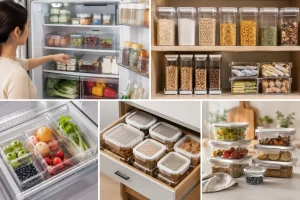
Refrigerator organizers transform chaotic fridge shelves into categorized zones. Clear, stackable bins with pull-out drawers or handles are the top sellers in 2026.
What to look for:
- Crystal-clear PET material (shatter-resistant, not brittle at low temperatures)
- Built-in handles for easy pull-out access
- Drain trays for produce bins to prevent moisture buildup
- Modular sizes that fit standard refrigerator shelves (typically 12–16 inches wide)
3. Microwave-Safe Meal Prep Containers
Best for: Portion control, weekly meal prep, leftovers.
Meal prep containers have exploded in popularity as more consumers embrace batch cooking and healthy eating routines. These containers need to survive the microwave, dishwasher, and freezer without warping or leaching.
What to look for:
- PP (polypropylene, #5 plastic) — the only microwave-safe plastic
- Vented lids for steam release
- Leak-proof seals for liquid meals
- Stain-resistant interiors
⚠️ Warning: Never microwave containers labeled with recycling codes #3 (PVC), #6 (polystyrene), or #7 (polycarbonate). Always verify the manufacturer’s microwave-safe certification.
4. Bulk Food Storage Containers
Best for: Large-quantity staples — flour (5–25 lbs), rice, pet food, bird seed.
Bulk storage containers serve households that buy in volume and small businesses that need hygienic ingredient storage. The market for large-capacity (5L–25L) containers is growing rapidly.
What to look for:
- Wide-mouth openings for easy scooping
- Caster wheels on containers over 10L
- Airtight lids with silicone compression seals
- Measurement markings on the side
5. Specialty Containers (Spice Jars, Snack Dispensers, Pour-Top Bottles)
Best for: Spices, candy, cereal dispensing, oil and vinegar.
Specialty containers are the fastest-growing niche in kitchen organization. They appeal to consumers who want a fully curated, Instagram-worthy pantry.
What to look for:
- Uniform sizing for a cohesive look
- Pour spouts or shaker tops for controlled dispensing
- Pre-printed or customizable labels
- Compact designs for spice racks and drawer inserts
Materials Compared: Which Plastic Is Best for Food Storage?
Not all plastics are created equal. Here’s a side-by-side comparison of the most common food storage materials:
| Material | Safety Rating | Microwave Safe | Freezer Safe | Durability | Clarity |
|---|---|---|---|---|---|
| PET / PETG | ★★★★★ | ✗ | ✓ | ★★★★ | Excellent |
| PP (Polypropylene) | ★★★★★ | ✓ | ✓ | ★★★★ | Good |
| PE (Polyethylene) | ★★★★ | ✗ | ✓ | ★★★ | Fair |
| Tritan™ | ★★★★★ | ✓ | ✓ | ★★★★★ | Excellent |
| PS (Polystyrene) | ★★ | ✗ | ✗ | ★★ | Good |
Key takeaway: For food storage, PET/PETG and PP are the gold standards. They are BPA-free, food-contact approved by both the FDA and EU regulations, and perform well across temperature ranges.
7 Features That Separate Premium Containers from Cheap Ones
When sourcing or shopping for food storage containers, these are the features that signal quality:
1. ✅ True Airtight Seals
Not all “sealed” lids are airtight. Look for 4-point locking mechanisms with replaceable silicone gaskets. Cheap snap-on lids without gaskets let air in within days.
2. ✅ BPA-Free and Food-Grade Certification
Verify that products carry certifications like:
- FDA 21 CFR (US food contact compliance)
- EU Regulation 1935/2004 (European food contact materials)
- LFGB (German food safety standard)
- SGS / Intertek / TÜV test reports
3. ✅ Stackable Design
Nesting and stackable containers save up to 40% of shelf space. Retailers should prioritize brands that design lids to nest inside the container when not in use.
4. ✅ Dishwasher Safe
Top-rack dishwasher compatibility is the #1 feature consumers search for in food storage. Containers that warp or cloud after a few wash cycles generate negative reviews and returns.
5. ✅ Measurement Markings
Side-printed volume indicators (in ml, oz, cups) add practical value at zero additional manufacturing cost. This is a strong differentiator for B2B buyers choosing between suppliers.
6. ✅ Pour Spouts and Accessory Lids
Interchangeable lids — solid, pour-spout, and shaker — turn a single container into a multi-use product. This appeals to minimalists and increases perceived value.
7. ✅ Uniform Product Lines
The best brands design their entire line around a modular system. Lids fit multiple container sizes, and containers stack across sizes. This drives repeat purchases as customers build their sets.
Food Storage Container Certifications: What B2B Buyers Must Know
If you’re importing or retailing food storage containers, certification compliance is non-negotiable. Here’s a quick reference:
| Market | Required Certification | Focus |
|---|---|---|
| United States | FDA 21 CFR 177 | Chemical migration limits |
| European Union | EU 10/2011, Reg. 1935/2004 | Overall and specific migration |
| Germany | LFGB Section 30/31 | Stricter migration + sensory tests |
| United Kingdom | UK SI 2012/2619 | Post-Brexit food contact rules |
| Australia/NZ | FSANZ Standard 3.1.1 | Material safety |
| Canada | CSA / Health Canada | Consumer product safety |
🔍 Sourcing tip: Always request third-party test reports (SGS, Intertek, BV) rather than relying solely on a factory’s self-declaration. Reputable manufacturers like Maxlink CN provide full certification documentation with every order.
Kitchen Organization Trends Driving Storage Container Sales in 2026
Understanding market trends helps both homeowners and business buyers make forward-looking choices:
📈 Trend 1: “Decant Everything” Aesthetic
Driven by social media, consumers are moving away from branded packaging and toward uniform, labeled containers. Matching sets of clear airtight containers with minimalist labels are the #1 pantry trend.
📈 Trend 2: Small-Space Living Solutions
As urban apartments shrink, demand for modular, stackable, and multi-functional storage is surging. Containers that work in the pantry, fridge, AND freezer (3-in-1 use) command premium pricing.
📈 Trend 3: Sustainability and Durability
Consumers are rejecting single-use plastics and cheap containers that need replacing every few months. Long-lasting, durable containers — even at a higher price point — are winning market share.
📈 Trend 4: Smart Storage (Labeling + Apps)
QR-coded labels that link to pantry inventory apps, and containers with built-in date dials are gaining traction among tech-savvy consumers.
📈 Trend 5: Pet Food Storage
The pet industry is booming, and dedicated airtight pet food containers are one of the fastest-growing sub-categories in home storage.
How to Buy Food Storage Containers in Bulk: A B2B Checklist
Sourcing containers at scale requires careful evaluation. Use this checklist before placing a bulk order:
- [ ] Material verification — Confirm food-grade PET/PP with raw material certificates
- [ ] Certification package — FDA, EU, LFGB, or market-specific compliance
- [ ] MOQ (Minimum Order Quantity) — Ensure it matches your market size and storage capacity
- [ ] Customization options — Logo printing, custom colors, private labeling, custom packaging
- [ ] Sample evaluation — Always test samples for seal quality, durability, and dishwasher performance
- [ ] Lead time and logistics — Standard production is 25–45 days; factor in shipping (sea freight from China: 25–40 days)
- [ ] Quality control process — Does the supplier conduct in-line and final inspections? (AQL 2.5 is standard)
- [ ] Packaging — Retail-ready packaging vs. bulk packing affects your downstream costs
- [ ] After-sales support — Replacement policy for defective units
📦 Looking for a reliable supplier? Maxlink CN specializes in high-quality pantry storage containers, refrigerator organizers, and home storage solutions. We offer competitive MOQs, full certification support, and private label services for global brands. Contact us for a free quote.
Frequently Asked Questions (FAQ)
What is the safest material for food storage containers?
PET/PETG and PP (polypropylene) are considered the safest plastics for food contact. They are BPA-free, FDA-approved, and do not leach harmful chemicals under normal use conditions.
Are airtight food storage containers worth the investment?
Yes. Airtight containers extend food shelf life by 2–4x compared to open bags or non-sealed containers. For dry goods like cereal, flour, and coffee, the freshness difference is dramatic.
Can I put plastic food storage containers in the dishwasher?
Only PP (#5) containers are reliably dishwasher-safe. PET containers should be hand-washed to prevent clouding. Always check the manufacturer’s care instructions.
How long do plastic food storage containers last?
High-quality PP and PET containers last 3–5 years with regular use. Signs it’s time to replace: warping, deep scratches, persistent odors, or clouded transparency.
What certifications should I look for when importing food containers from China?
The key certifications are FDA 21 CFR (for the US market), EU 10/2011 (for Europe), and LFGB (for Germany). Always verify with third-party test reports from SGS, Intertek, or BV.
What’s the difference between food-grade and non-food-grade plastic?
Food-grade plastic is manufactured without harmful chemicals like BPA, phthalates, or heavy metals, and is tested to ensure no chemical migration into food. Non-food-grade plastic may contain recycled materials or additives unsafe for food contact.
Final Thoughts
Whether you’re organizing your own kitchen or building a product line for retail, choosing the right food storage containers comes down to material safety, functional design, and reliable sourcing.
The market is growing — global demand for home storage products is projected to exceed $18 billion by 2028 — and the brands that win will be the ones that prioritize quality, certifications, and consumer-friendly design.
Ready to source premium food storage containers? Explore Maxlink CN’s full product range and discover why retailers across North America and Europe trust us as their manufacturing partner.
Published: July 2026 | Author: Maxlink CN Editorial Team
Category: Home Storage Guide | Tags: food storage containers, pantry organization, airtight containers, BPA-free, kitchen storage, bulk storage, OEM manufacturer China
- Phone: +86(574)88888888
- mail: [email protected]
- Address: Ningbo,China