Table of Contents
Woven Storage Baskets: A Practical Guide to Rattan-Look Home Organizers (2026)
Woven storage baskets have become top-selling home organizers for global wholesale buyers. From pantries to closets, rattan-look PP baskets balance decor and storage functionality.
Storage used to be something you hid. In 2026 it is something buyers want on display. Open shelving, glass-front cabinets, and styled pantries have turned ordinary containers into things people actually look at, and woven storage baskets have quietly become one of the fastest-growing pieces of the home organization market because of it. They do the work of a plastic bin while reading as decor, and for retailers that combination is hard to pass up.
For global buyers they also fill a gap that clear plastic does not. Airtight food storage containers keep dry goods fresh, refrigerator storage bins handle produce, and woven baskets take care of the visible, everyday clutter: loose onions, packaged snacks, kitchen linens, cleaning supplies, towels. The product families layer together rather than compete – which is exactly why a store that stocks all of them tends to win the basket.
Why Woven Storage Baskets Are Trending
The move toward natural-material interiors has been building for a while. People still want their homes organized, but they have grown tired of sterile, all-plastic solutions and now reach instead for textures that feel handmade. Real rattan and wicker deliver that look, yet they bring genuine problems: they are brittle, awkward to clean, sensitive to humidity, and hard to make consistently at scale.
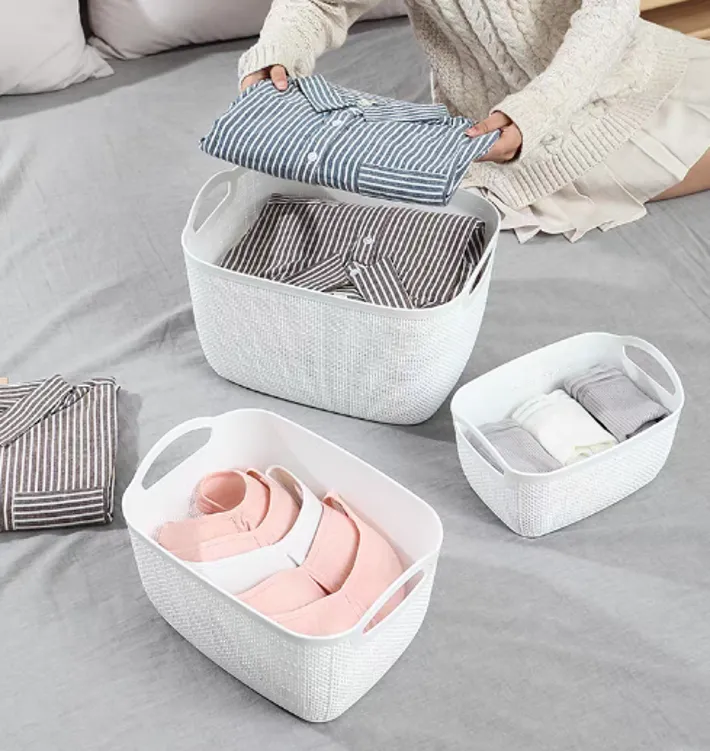
That gap is where woven PP (polypropylene) baskets come in. They mimic the strand-by-strand look of woven rattan while staying tough, light, moisture-resistant, and washable. A basket can hold the boho, hand-crafted aesthetic in a living room and still be carried to the laundry and hosed down afterward. For importers that practicality means fewer complaints and returns, and it reaches a far broader buyer audience than fragile natural wicker ever could.
The Most Popular Woven Basket Categories
Woven baskets split into a handful of clear use cases, and most buyers end up wanting more than one.
| Basket Type | Best Use Cases | Where It Shines |
|---|---|---|
| Lidded Woven Storage Baskets | Living room, bedroom, closet – items that should stay dust-free and out of sight | Home storage catalogs |
| Open Lidless Woven | Pantry, kitchen shelves, bathroom – fast daily access | Kitchen and pantry walls |
| Large Capacity Laundry Woven Baskets | Laundry, hampers, bulky linens | Household and dorm retailers |
| Multi-Piece Basket Combo Sets | Whole-room sets sold together | Gifting and move-in bundles |
| Thick Strip Plastic Basins | Heavy, wet use – washing, cleaning, utility | Cleaning gear buyers |
The two extremes matter most for importers. Open lidless woven baskets sell into kitchens and pantries where speed beats dust protection; lidded baskets sell into living spaces where shoppers want clutter genuinely hidden. A range that covers both is what lets one buyer furnish several rooms from the same brand.
Features That Actually Drive Sales
A woven basket sells because it solves a problem and still looks intentional in a room. A few features decide whether it does both.
Weave tightness and rigidity. The tighter the strand is woven, the more a basket looks like real rattan and the more it holds its shape over time. Loose weaves sag, and a sagging basket is the difference between “stylish” and “tired” on a shelf.
Handles, or the lack of them. Handles change where a basket can live. A handled laundry basket gets carried room to room; a handle-less lidless basket slides into a cabinet. Know which use case you are sourcing for before you spec a sample.
Lidded versus open. Lidded baskets hide mess and keep dust off stored textiles. Open ones win on speed and visibility. Stocking both lets a single shopper buy a couple of each, and that is usually what happens.
Wipe-clean, moisture-tolerant PP. Unlike real wicker, woven PP can be wiped down and used in damp spots – bathrooms, mudrooms, near the sink – without warping or going moldy. That single trait is why PP baskets outsell natural wicker in volume markets.
Color and finish. PP dyes evenly, so a brand can run matching series in greys, naturals, and seasonal colors that fit a kitchen or living room. Consistent color across reorders is what keeps a private-label line looking like a line.
How Woven Baskets Fit a Whole Kitchen Organization System
Woven baskets rarely sell on their own. They are at their best as part of a layered setup, and shoppers respond strongly to the complete picture.
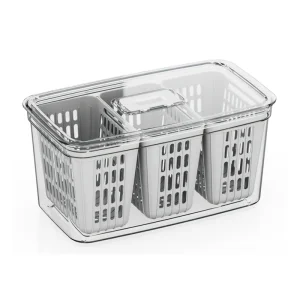
The short version: keep dry, airtight goods in sealed airtight food storage containers; keep fresh and chilled items in clear fridge and cabinet organizer bins; and use woven baskets for the room-temperature, breathable, grab-and-go things – produce that should not be sealed (potatoes, onions, garlic), packaged snacks, kitchen linens, and small countertop tools.
On the counter, pair them with mini PE countertop storage boxes for the tiny items that rattle around loose, and in the pantry use lidded woven baskets for bulk and overflow that clear containers were never meant to hold. It is the same layered thinking we walked through in our guides on choosing kitchen plastic storage boxes and the best pantry storage containers – woven baskets are simply the textured layer that finishes the system, the way refrigerator storage bins are the cold-storage layer.
For wholesalers this matters at the cart. People rarely want a single basket; they want a kitchen that feels handled. That is why bundling woven baskets with airtight containers and fridge organizers reliably grows average order value rather than cannibalizing it.
Sourcing Tips for Importers and Retailers
When you evaluate a woven basket supplier, a handful of questions separate a good partner from the rest.
Material grade. Confirm food-grade PP for any basket marketed for kitchen or food use, and ask for test reports rather than verbal assurance. Not all PP is food-contact rated, and the difference shows up the moment a retailer gets audited.
Weave and weight tolerance. A basket rated to hold 5 kg should not flex until its handles bend. Ask for load ratings and order a real sample, not just a studio photo, then load it yourself.
Color consistency across runs. PP can shift between dye lots. Continuous supply means the warm grey you launch with should still match the warm grey you reorder six months later, otherwise private-label reorder customers notice fast.
Customization and MOQ. Reliable makers offer OEM color, size, logo tags, and lining, but minimum order quantities vary a lot by customization type. Pin the MOQ down before committing to a private-label plan.
QC and export packing. Woven products are awkward to ship – bulky, but easy to crush. Confirm the supplier runs real quality control steps such as weave inspection and handle pull tests, and that export cartons are strong enough to arrive shelf-ready rather than dented.
A supplier that already produces the full storage range – woven baskets, pantry containers, and fridge bins – can usually consolidate production and lower your per-unit cost. That is the real advantage of sourcing from one manufacturer through a single OEM and ODM program instead of chasing each category from a different factory.
Conclusion
Woven storage baskets are not a passing decor fad. They answer something specific: people want storage that looks as considered as the rest of their home, and they want it to survive actual daily use. For brands, wholesalers, and retailers, woven PP rattan-look baskets are the practical way to offer that – durable, customizable, and easy to bundle with the clear containers and fridge organizers shoppers already buy.
MaxLink CN manufactures woven PP storage baskets under OEM and ODM programs, with food-grade materials, custom colors and sizes, private-label packaging, and export-ready quality control. If you are building a woven basket collection or expanding a kitchen organization range, request a wholesale quote and we will help you put the assortment together.
- Phone: +86(574)88888888
- mail: [email protected]
- Address: Ningbo,China